


When I was a teenager I went through a time of profound loneliness and despair which got progressively worse and worse. I felt invisible in the world. It was like I didn't exist. I was just...there. I was so anxious, this place I was in felt like a prison. I felt like I couldn’t change my behaviour, couldn’t change the way I acted around people and I knew things were only going to get worse. And so, I began to fantasise about not being here any more and this fantasy got bigger and bigger.
The thing is I didn’t hate life. I didn’t want to die. I wanted to live. It's just that... I felt incapable of it.
I’ve tried to describe this to people over the years and the image that always comes to mind is of a chasm. I always picture it like the staircase in the Mines of Moria in The Fellowship of the Ring. I feel like I am on this little platform and across the chasm from this platform is a staircase going up and up and up into new and exciting places. I know that if I could get to the other side of that chasm, life could take on an upward spiral. But at that time, in that dark lonely hole, there was no way of crossing that chasm. Hence: fantasies of non-existence.
I had no energy for doing anything. I was just…stuck. But, after hitting the rock bottom of this hole, something happened — I started to read. I didn't have any hopes of this bridging the chasm — that still seemed uncrossable but when I was reading it just wasn’t such a problem anymore. It wasn’t like video games — which I stopped playing then and have never really played again (aside from a bout of Civilisation V during a very stoned phase in university). There was something different about books. But it wasn't books but the books I was reading.
You see the books I was reading were old hero stories. The first I read was The Three Musketeers by Alexander Dumas and it is still one of my favourite books ever (fortunately it was abridged otherwise I probably never would have finished it (or started it)). From there I read whatever old books like these we had lying around the house — thinking about it now I have no idea where they came from because I’m sure we didn’t read them as kids or at least I didn't and I can’t really remember them before this time. Anyway, we had books like Dumas’ The Three Musketeers, Jack London’s Call of the Wild and Arthur Conan Doyle’s The Lost World.
They were all of a particular genre — hero stories. They were all journeys where the protagonist set off at the start in a state not too dissimilar to my mental prison — they were weak, ineffectual nothings. They were your typical white knight simp oscillating between their sense of inferiority and their dreams of grandeur. But, through the course of their adventures, things changed and they rose to the challenges that faced them and they found friendship and love and admiration. There was something pure in them .
As my upward spiral progressed and I discovered philosophy this phase didn’t go away entirely but instead it morphed into a more classical form: the biography. I read the biographies of Bob Dylan, Benjamin Franklin and Teddy Roosevelt; in university, I was fascinated by ancients like Alexander the Great and Julius Caesar and Augustus and I also remember reading Merezhkovsky's fictionalised biography of da Vinci that fascinated Freud so much. This habit hasn't disappeared since university — I've been moved and inspired by biographies of Buddha, Muhammad, Brian Ború and Elon Musk, a few biographies of Nietzsche and other thinkers like Walt Whitman, Foucault, Marx and Henry David Thoreau.
The thing is, many of these lives had no relevance to mine — I had no intention of being a politician or a military leader or a painter or a musician but that didn't detract from their effect; what I found in these books was a sense of “great pitch and moment” — a sense of history. I guess I was intoxicated with the heroic journeys of these larger than life characters.
Archetypal Bellows
What people don't appreciate (my university history professor in particular) is that something is happening to us when we read these biographies. It’s the same thing that happened to me when reading The Three Musketeers and the other hero stories a few years earlier.
In fact, there's more similarity between them than you think. Many of these larger-than-life figures were really similar to the characters in the books. Musk was known for spacing out and was bullied so bad in South Africa that he almost died when he was kicked down the stairs by bullies as a kid. Teddy Roosevelt was a perpetually sick kid who was bedridden for much of his childhood and it was in this time that he devoured the stories of heroes. Napoleon was a reclusive kid who loved to read history as well.
Point being, these biographies were a more sophisticated version of the same thing as the hero stories that saved me as a teenager. After reading The Rise of Theodore Roosevelt for the second time in university I went into an archetypal fever. I remember my flatmate’s bemusement when she entered the kitchen and found me staring at the wall in a willpower-building exercise. I started getting up at 5 am doing yoga, tai chai, learning Italian, practising speed reading and analytic reading and then going back to bed to try and have lucid dreams. Of course, the manic pace of what I was calling my “Übermensch Program” was destined for failure. Despite what Tony Robbins would have you believe, this isn't how transformation happens. I was soon back wallowing in my own inadequacy.
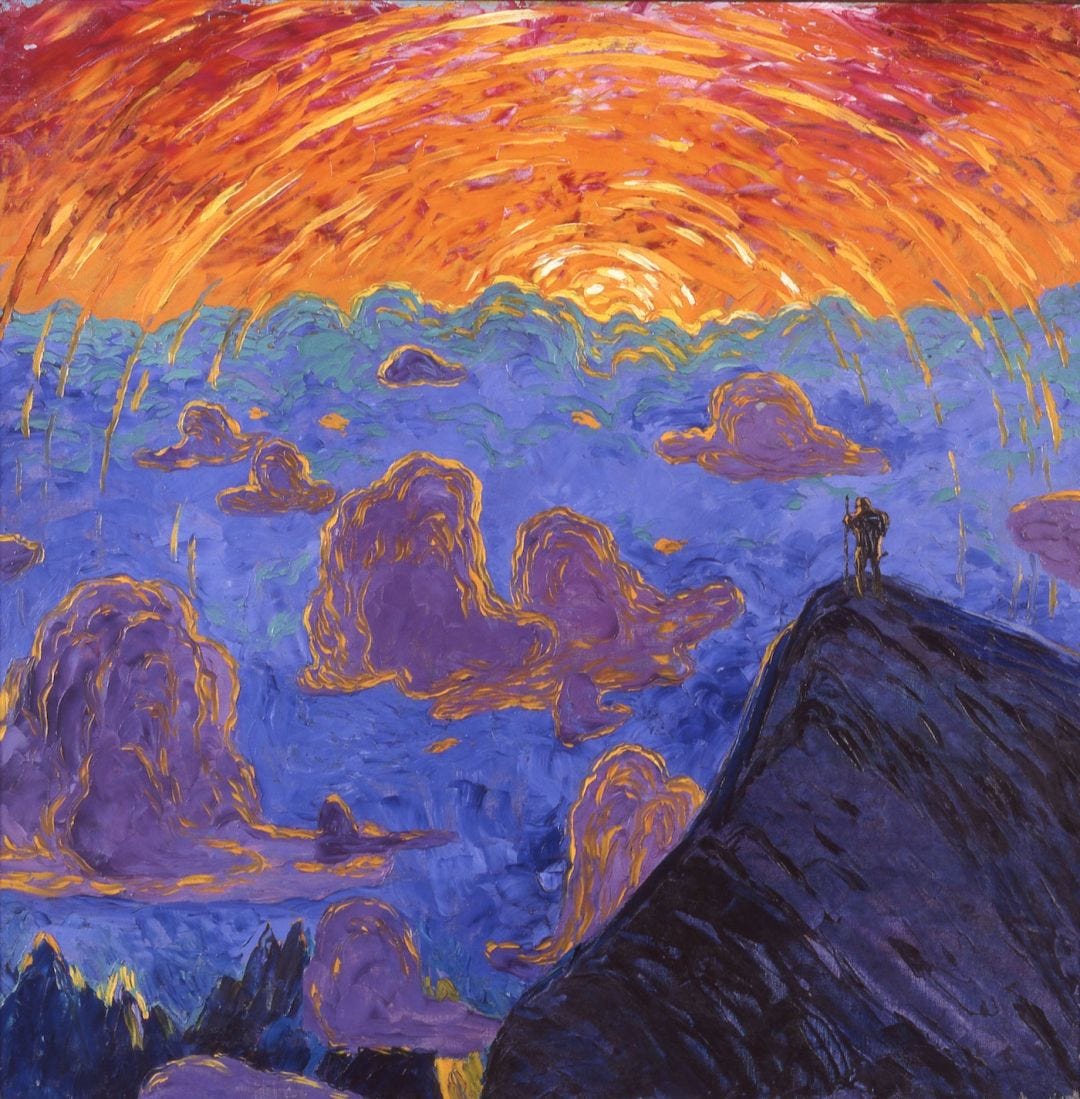
But the point is that these larger-than-life biographies, like the hero stories, have a profound effect on us. They are archetypal bellows overcharging us with life — driving us to action.
I’m fairly sure this is what the whole Marvel thing is about though to be honest I haven’t seen any Marvel movies since the second Ironman and the last superhero movie I watched was the third Christopher Nolan Batman movie. I do know that those Batman movies were not about archetypal inspiration any more than Oppenheimer is; they're about the compromises between principles and reality.
The hero stories aren’t tainted by such contact with reality. As we explored in the Romcom article, if you want contact with reality read some Dostoevsky. The purpose of such pieces of art is categorically different to these books.
These books are about giving us life. That’s why I loved fantasy and sci-fi books and series and why I'm proud of reading those somewhat cheesy books back in the day.
Others moved by the bellows
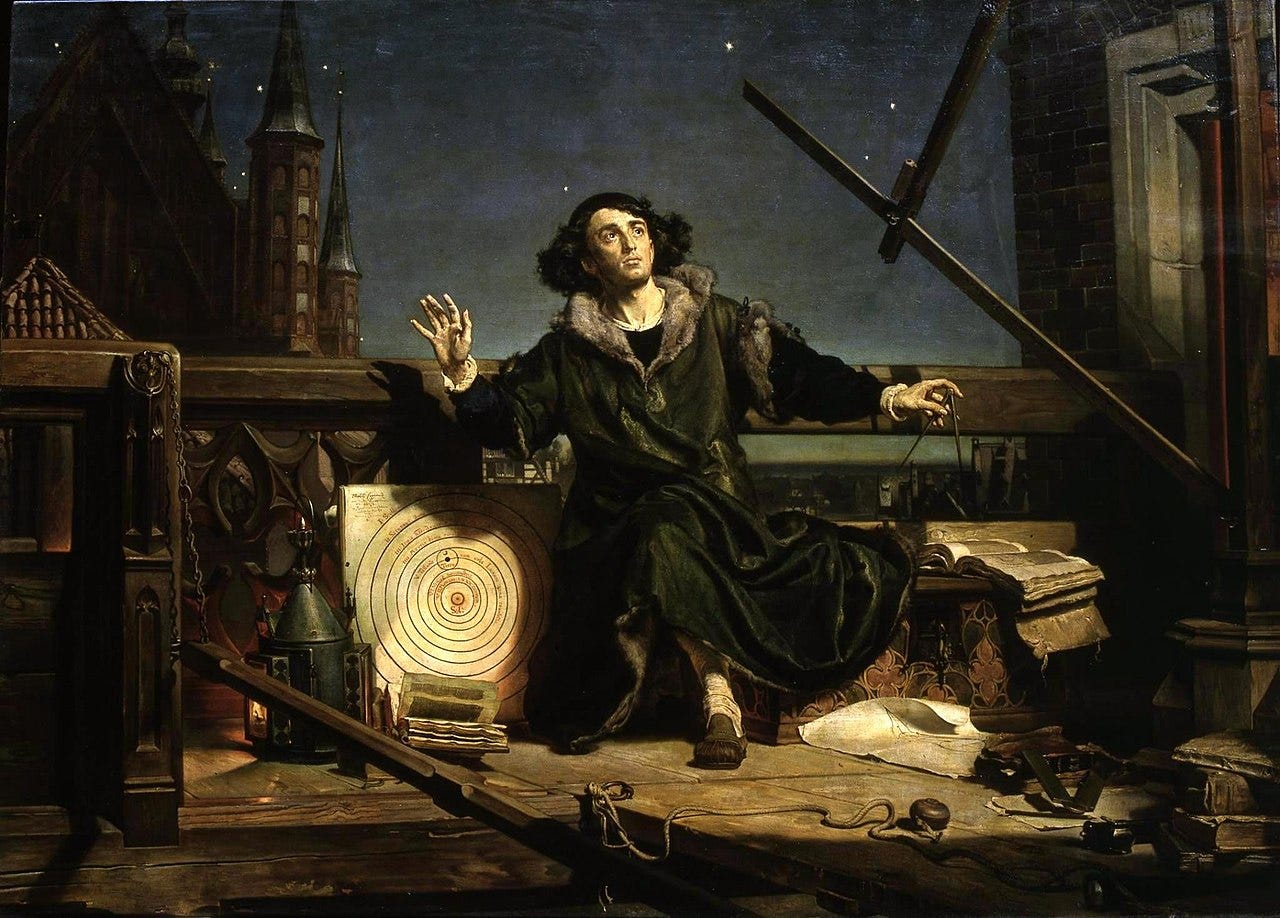

And if you're looking for more evidence than my experience you can listen to the words of some of those larger-than-life individuals I read about.
Musk
In Ashlee Vance's biography of Elon Musk, he talks about Musk’s reading as a kid. He loved science-fiction and fantasy and he even tried his hand at writing some fantasy stories involving dragons and supernatural beings saying that he wanted to write something like Lord of the Rings. Ashlee Vance writes:
A boy fantasizing about space and battles between good and evil is anything but amazing. A boy who takes these fantasies seriously is more remarkable. Such was the case with the young Elon Musk. By the middle of his teenage years, Musk had blended fantasy and reality to the point that they were hard to separate in his mind. [...] “Maybe I read too many comics as a kid,” Musk said. “In the comics, it always seems like they are trying to save the world. It seemed like one should try to make the world a better place because the inverse makes no sense.”
Hitler
If you don't like Musk, you’ll love this next one. Despite what he wanted people to think, Adolf Hitler's main reading was never Goethe or Fichte but cowboy stories of the American West where the good (that is to say white) guys always win. Among the 16,000 books of his found after his death, there were over a thousand well-read novellas of not just these cowboy stories but also a lot of romance stories (like myself, Hitler loved a romcom). Where others would turn to the Bible in times of trouble, Hitler would turn to the cowboy stories of Karl May.
Napoleon
Here's a passage from Andrew Roberts's biography of Napoleon:
he was a precocious and prodigious reader, drawn at an early age to history and biography. [...] Napoleon claimed that he first read Jean-Jacques Rousseau’s La Nouvelle Héloïse, an 800-page novel of love and redemption [the sauciest love story ever written by a philosopher and the best selling novel of the 18th century], at the age of nine, and said ‘It turned my head.’
Teddy Roosevelt
The same theme comes up in Edmund Morris’s biography of Teddy Roosevelt. He writes that:
As his reading abilities developed, and his ill-health continued, he turned more and more to stories of outdoor action, in which he could identify with heroes larger than life: the novels of Ballantyne, the sea-yarns of Captain Marryat, Cooper’s tales of the American frontier. Epic poetry, too, inspired him—above all Longfellow’s Saga of King Olaf, with its wild warlocks, blaring horns, and shields shining like suns.
And here's Teddy's own description:
I was nervous and timid. Yet from reading of the people I admired,—ranging from the soldiers of Valley Forge, and Morgan’s riflemen, to the heroes of my favorite stories—and from hearing of the feats performed by my Southern forefathers and kinsfolk, and from knowing my father, I felt a great admiration for men who were fearless and could hold their own in the world, and I had a great desire to be like them.
We might also think of Caesar crying at 30 because he hadn't achieved what Alexander the Great had by that age and of Alexander fawning over Heracles as his icon.
Fiction might seem like such a pointless thing to the overly serious reader; fantasy and sci-fi are often dismissed as the shameful past-time of men in a state of Arrested Development. But it all just reminds of that Bob Dylan song “The Ballad of a Thin Man” where he sings about a journalist entering into the strange countercultural scene of the 60s. Dylan sings:
“You know something is happening here but you don't know what it is. Do you Mr Jones?”
I’m sure this could all be knitted with a Metamodernesque commentary on our Postmodern era in which all sincerity has to be coated in irony. It’s too vulnerable to be earnest — it’s cringy. Instead of naked emotion, we must dress up the archetypal passions in more respectable, psychologically shrewd attire. Such naked unreflective heroism would be jarring in our Postmodern mainstream.
We live in an era that no longer believes in heroes. Our fantasy is fed to us in the jaded cynical form of Game of Thrones and our superheroes have to make meta-ironic commentary on the silliness of the genre or else capitulate altogether into the jaded cynical form of Christopher Nolan's Batman trilogy or Joker.
We are all proud of loving Dostoevsky but we keep our romcoms, sci-fi and fantasy to ourselves as our own dirty little secrets. But without the hope we find in romcoms you get incels and without the dreaming of sci-fi and fantasy you get the crushing mundanity of our Postmodern prison. I will never forget that these naive, earnest, unrealistic hero stories saved me and I would advise everybody with a hole in their heart to keep a space for them. As we've seen such stories have inspired some of the greatest (if most questionable people) in history. While the rest of us are too jaded to dream beyond our prison, those strange souls were called to a bigger game.
Even if we don't want to be mass murderers or billionaires I do believe that most of us should dream bigger than the prison irony and edginess confines us to. For my part, I am grateful for these unrealistic books and genres because at a moment where it seemed impossible and all seemed lost, they helped me cross a chasm that promised to imprison me for life.
Thank you for sharing vulnerabilities that ring true to so many of us. In these days of extremism, I read mystery stories because (usually) good triumphs over evil and I can breathe easier.