

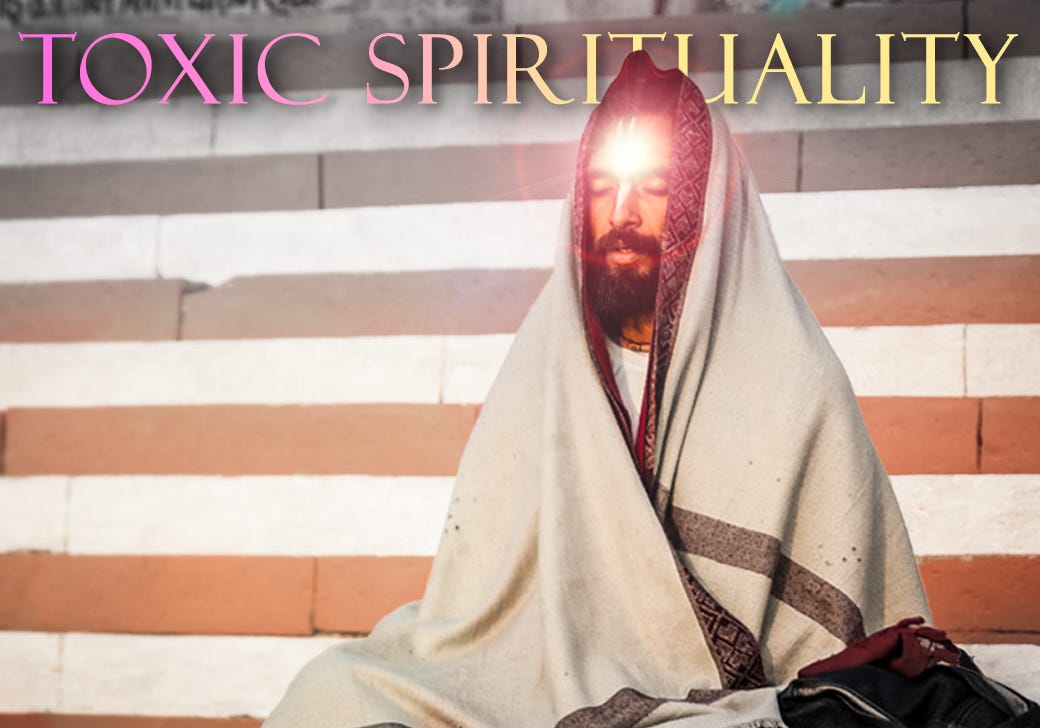
Today I want to do something we haven't done in a while and that's rail against the intoxicating mirages of spiritual gurudom. I’ve touched on this theme a few times in the past. As someone who has spent years drunk on various gurus, I feel it is my divinely ordained responsibility and I take that very seriously.
The prompt for today came from a book by the Tibetan Buddhist teacher and master Yongey Mingyur Rinpoche called Joyful Wisdom (presumably not a reference to Nietzsche’s Gay Science which has also been translated as The Joyful Wisdom):
“the pleasure derived from external sources is, by nature, temporary. Once it wears off, the return to our “normal” state seems less bearable by comparison. So we seek it again, maybe in another relationship, another job, or another object. Again and again, we seek pleasure, comfort, or relief in objects and situations that can’t possibly fulfill our high hopes and expectations.
The Suffering of Change, then, could be understood as a type of addiction, a never-ending search for a lasting “high” that is just out of reach. In fact, according to neuroscientists I’ve spoken with, the high we feel simply from the anticipation of getting what we want is linked to the production of dopamine, a chemical in the brain that generates, among other things, sensations of pleasure. Over time, our brains and our bodies are motivated to repeat the activities that stimulate the production of dopamine. We literally get hooked on anticipation.
Tibetan Buddhist texts liken this type of addictive behavior to ‘licking honey off a razor.’ The initial sensation may be sweet, but the underlying effect is quite damaging. Seeking satisfaction in others or in external objects or events reinforces a deep and often unacknowledged belief that we, as we are, are not entirely complete; that we need something beyond ourselves in order to experience a sense of wholeness or security or stability.”
— Joyful Wisdom by Yongey Mingyur Rinpoche (with Eric Swanson)
It’s the kind of quote I would have eaten up when I was 20. It combines the Western field of neuroscience with the wisdom of ancient Eastern Buddhism then slings this meatball at decadent modern life all while offering solutions to our problems.
But now I read this and it makes me a little bit nauseous. I know there are hordes of souls out there — lost as I was — who will take it at face value. Little do they know, their minds are being poisoned and their lives made worse.
What grinds my gears about it isn’t even super obvious. It’s not what’s there in the text but what stands behind it, beneath it — just out of sight and yet written all over it. On the surface this passage looks like another criticism of consumerist modern life; it even includes a little dig at dopamine — the 21st century’s most hated neurochemical (which by the way he has misunderstood)
But despite surface appearances, this passage isn’t about consumerist pleasures and the more, more, more of modern life but something much more radical. It’s a way of taking a modern trend and using it to justify what might be the most radical solution ever: enlightenment.
Everything is S**t
This passage frames human life as a marathon of unsatisfied thirst; this is standard Buddhism — the Third Noble Truth after all being that the root of all suffering is taṇhā often translated as “thirst” or “desire”.
And I’m not here to say that Buddhists like Yongey are wrong, just that they are hiding a lot of ideology behind a partial truth. As if the only thing going on in a relationship is desire; as if the only thing going on in a job is desire.
There’s a great Louis CK bit in his show Louie that does the same thing. Have a quick look at this (it’s the 25s from where the clip starts):
In the case of Louis, we can see that what he’s saying is true but also the sleight of hand is obvious. It’s almost a caricature of the Buddhist perspective; Louis knows it’s a brutalising of the truth but he’s playing the sleight of hand for comedic effect rather than ideology.
Coming back to Yongey, notice what he talks about — relationships, jobs and objects. They’re the kind of things that people talk about this way. But what about parenthood? You can get away with reducing relationships and objects to desire because of cliché but I don’t know many parents who would let you get away with characterising parenthood that way. No doubt desire is present but so is love; so is laughter and joy and excitement and relief.
The following is a quote from the work of psychology researcher Willoughby Britton who specialises in the adverse effects of meditation:
“Meditators also reported diminished emotions, both negative and positive. ‘I had two young children,’ another meditator said. ‘I couldn’t feel anything about them. I went through all the routines, you know: the bedtime routine, getting them ready and kissing them and all of that stuff, but there was no emotional connection. It was like I was dead.’”
Britton thought this was a bug in meditation but after interviewing countless Buddhist meditation teachers and presenting her findings to the Dalai Lama she has learned that it’s a feature. The entire gamut of life is flattened in the Buddhist example and called licking honey off a razor but what they don’t tell you is that their alternative — the Buddhist path of non-attachment — is a horror show.
The Horrors of Spiritual Attainment
Here’s the anti-spiritual-guru spiritual guru Jed McKenna in the humorous spiritual disclaimer at the opening of his cult classic Spiritual Enlightenment: The Damnedest Thing:
“The emotional upheaval attendant upon the discovery that who you thought you were is simply a fictional character in a staged drama may temporarily result in forlornness, anger, hostility, resentment, hopelessness, despondency, despair, depression, or a liberating awareness of life’s meaninglessness.”
Or in a less ironic form expressed later in the book:
“This is the scariest part of all. What about the good? Friends! Love! Dance! My heart! Isn’t all that real? Aren’t these memories real? Isn’t my heart real? What of that? What? This isn’t where the battle is fought, this is where the battlefield is first fully apprehended. The person who arrives at this point is not the person who goes beyond. In this process, resistance is conquered and non-resistance takes its place; acceptance, recognition, surrender.”
Now I could invoke Nietzsche and have some sophisticated tete-a-tete between great philosophies to argue against this ascetic nihilism but it’s not necessary. One need only look to the much humbler (and less esteemed) philosopher Butters of South Park fame for the counterargument to this ancient wisdom (watch to 1:10):
The point being, even with the sadness of the dead puppy, even with the heartbreak, that doesn’t invalidate the value of the experience. Now, this is probably because Butters’s perspective on life wasn’t warped through the lens of a reductionist philosophy which flattens all life to desire and suffering.
Have we all forgotten Tennyson’s great line:
“tis better to have loved and lost
Than never to have loved at all”
This knowledge has been cliché since at least 19th-century Romanticism and yet has somehow been completely forgotten by the spiritual subculture.
Who’s Falling for It?
So why are people sucked in by all this? Who (aside from me) is falling for the pitch? Let’s go back and think about it a little deeper. The first rhetorical strategy we find is the reduction of the pleasure derived from external sources as temporary. What does this mean? It means it doesn’t last forever. Okay. Is that a major problem?
There is something implied here and you might not pick it up. If external pleasures are temporary and undesirable then the implication is that internal pleasures are permanent.
It’s an argument that Socrates makes in Plato’s Gorgias where he argues that the fool’s appetites are like leaking jars filled with a sieve. We are never satisfied because we must keep running back and forth filling ourselves up. The wise man’s appetites, on the other hand, are sealed jars — sorted now and forever.
That’s the carrot on the stick that leads people on the path to the Big Rock Candy Mountain called enlightenment. They think they can get unlimited access to the pleasure — to the bliss that comes with meditation. Of course once on the path we bullshit ourselves that such bliss is a distraction from the path and what we really want is enlightenment but then the second we start feeling that banga banga of positive sensation we’re off on a trip. That’s because of the marketing. We’re told that external pleasures are temporary and that somehow invalidates them.
But that’s what life is. It’s temporary. The lows give meaning to the highs and leave us more grateful for it. We love and it’s the vulnerability of that love and the danger of pain that’s contained in that love which gives it value. But the spiritual gurus want to undermine that perspective. They want to simplify it; they want you to only focus on the negative — on that pain at the end. Which works if your life sucks, if you struggle with intimacy or if you are after a mad buzz.
Who It’s Really For
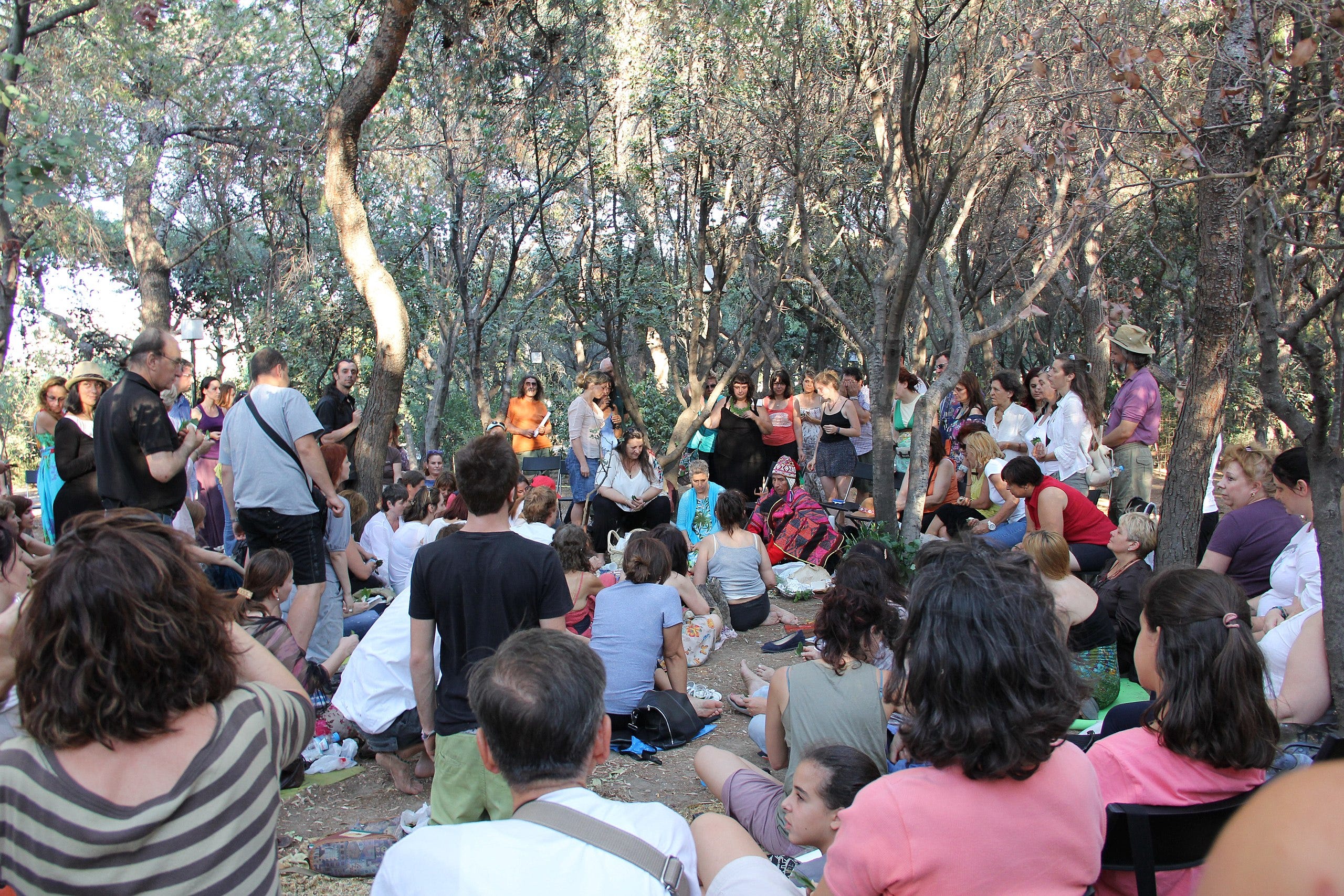

Unlike these gurus like Buddha and his ilk, I’m not trying to sell you on a universal path. I think there are certain people for whom the path to enlightenment makes sense. If you look at the accounts of those on this path —who as Jed McKenna has put it have “taken the first step” — these people aren’t to be envied but pitied. These are the very unfortunate select. They aren’t the blessed because they reach the state of the Tathāgata — the blown-out candle — where desire and pain no longer rule. You do not want to be them. The spiritual hell they had to go through to get there is a million times worse than any temporary pain you’d experience in the path of normal life. As Jed McKenna wrote:
“The price of truth is everything, but no one knows what everything means until they’re paying it.”
And that’s those who make the other side. How many people are desiccated before reaching the other side? To what extent are (authentic) gurus a case of Survivorship Bias? I’ve had friends go through (and still going through) Kundalini Awakenings — an experience which is, for all intents and purposes, hell on earth. Yes, there are some cool spiritual babies in there but when the bathwater is a million shades of torture one isn’t inclined to advocate for it.
And so while I’m far from a spiritual sceptic, I do suffer nausea when I encounter universalising spiritual discourse. This is the furthest thing from a universal path. It is comparable to promoting chemotherapy to a person who doesn’t have cancer or using nuclear war to sort LA’s traffic — it is egregious overkill.
The unfortunate elect should be supported and their insight appreciated but we shouldn’t pretend that this is something for everyone or desirable for anyone. As Sri Ramakrishna put it:
“Do not seek illumination unless you seek it as a man whose hair is on fire seeks a pond.”
What I’m saying then isn’t that there are no benefits to meditation or yoga. My point is more about this bigger sell — the deeper pitch contained in the spiritual texts especially in the likes of Buddhism and Hinduism as they’ve been imported to the West.
Spiritual Bypassing

The idea of reaching a state of being “entirely complete” — of not needing “something outside of ourselves in order to experience a sense of wholeness or security or stability” is just another layer of this spiritual nonsense. What Yongey is calling “licking honey off a razor” we call life. Sometimes it sucks but — and here is the part the Buddhist gurus seem to be overlooking — sometimes it doesn’t; sometimes it’s actually really good. Sure you can focus on the bad times and see life entirely through that lens but that is intellectually dishonest.
The thing is, we are social creatures. And we need people. Sure if you could go through a decade-long path of meditating sixteen hours a day you might begin to feel like you don’t need people. Except when you remember that the secure roof over your head and the food that fed you on that long journey into your soul didn’t come from nowhere.
But of course, the material dependence isn’t what Yongey and the other sages are talking about. He’s talking about emotional dependence. You should feel fine being supported by others but that should not have an emotional hold over you. You shouldn’t feel anything but complete unto yourself even as you really are. It sounds a little sociopathic when I frame it like that doesn’t it? Bit of a counterbalance to the big sell of spiritual gurudom.
That’s where I think we can get to the brass tax. I’ve been to meditation retreats and spent a lot of time around spiritual communities. In my experience the possession with the idea of enlightenment and this becoming “complete in oneself” and experiencing a sense of “wholeness” or stability is a sign of avoidance (usually among males it’s also worth noting). It’s not playing a brash game of cutting through illusion but a protection against vulnerability or a seeking after bliss without risk or else just plain one-upmanship in a spiritual subcultural hierarchy. Whichever way you cut it it’s kind of cringy and far from admirable.
Stephen Gallagher who is a psychology professor at our university here in Limerick wrote an article back in 2015 on The Association Between Spirituality and Depression in Parents Caring for Children with Developmental Disabilities and what he found was a correlation between the most depressed, struggling parents and the most spiritual ones. Those who fared better had robust social support — a community that provided emotional and material support.
The point here isn’t that spirituality was the cause of these people’s woes or isolation but that it was a life raft they clung to in the darkness. The spiritual literature tells us we can rely on ourselves and rather than licking honey off a razor we can find true contentment within. Such struggle shows us the opposite — that reaching out for help and receiving it is what we need.
The danger of spirituality in my opinion is that it whispers in our ear that we don’t need anyone —that we can be happy by ourselves. For those of us who have struggled with anxiety and depression it holds a promise of a happier life that doesn’t require us going out into the world and connecting with people. It promises a way to happiness that doesn’t lie through vulnerability and relying on other people but which we can find in ourselves. We are the people most vulnerable to this sales pitch and the people most damaged by it.
And again I’m not universally prescribing against the spiritual path. There are some people for whom it is absolutely essential and we are blessed for them because they (can) blossom into wonderful wonderful people. But they are the exception and their experience is more of a curse than it is a blessing until the later stages of the path. Some people are selected for this path and it is wonderful that we have these traditions to support them through it. But if you are one of them, then trust me: you won’t be able to avoid the path. As Jed McKenna wrote of Arjuna in the Bhagavad Gita:
“Arjuna didn’t get out of bed that morning hoping to see Krishna’s universal form, he was just having a bad day at the office when the universe flashed him.”
So if you are tempted by this path and you recognise that it may just be an escape from your own vulnerability then please change your philosophy. Please find loved ones to lick honey off a razor’s edge with. Go out and love and be hurt. Be more like Butters and less like Buddha.
So the next time you read some of these spiritual texts and feel a yearning in you to run away from it all maybe meet up with a friend first, maybe go to the pub, maybe call your mam. Because loneliness is a real problem in the 21st century and the answer isn’t to lock ourselves in a spiritual ivory tower. The answer is connection with people who love you. Or as Brene Brown put it to “dance with those that brung you.”
To be fair, this is the defect of the sutric paths, but there is also tantra, which is definitely about embracing life and seeing life itself as the path, even as a divine revelation. It's probably the spiritual modality needed in the 21st century.