

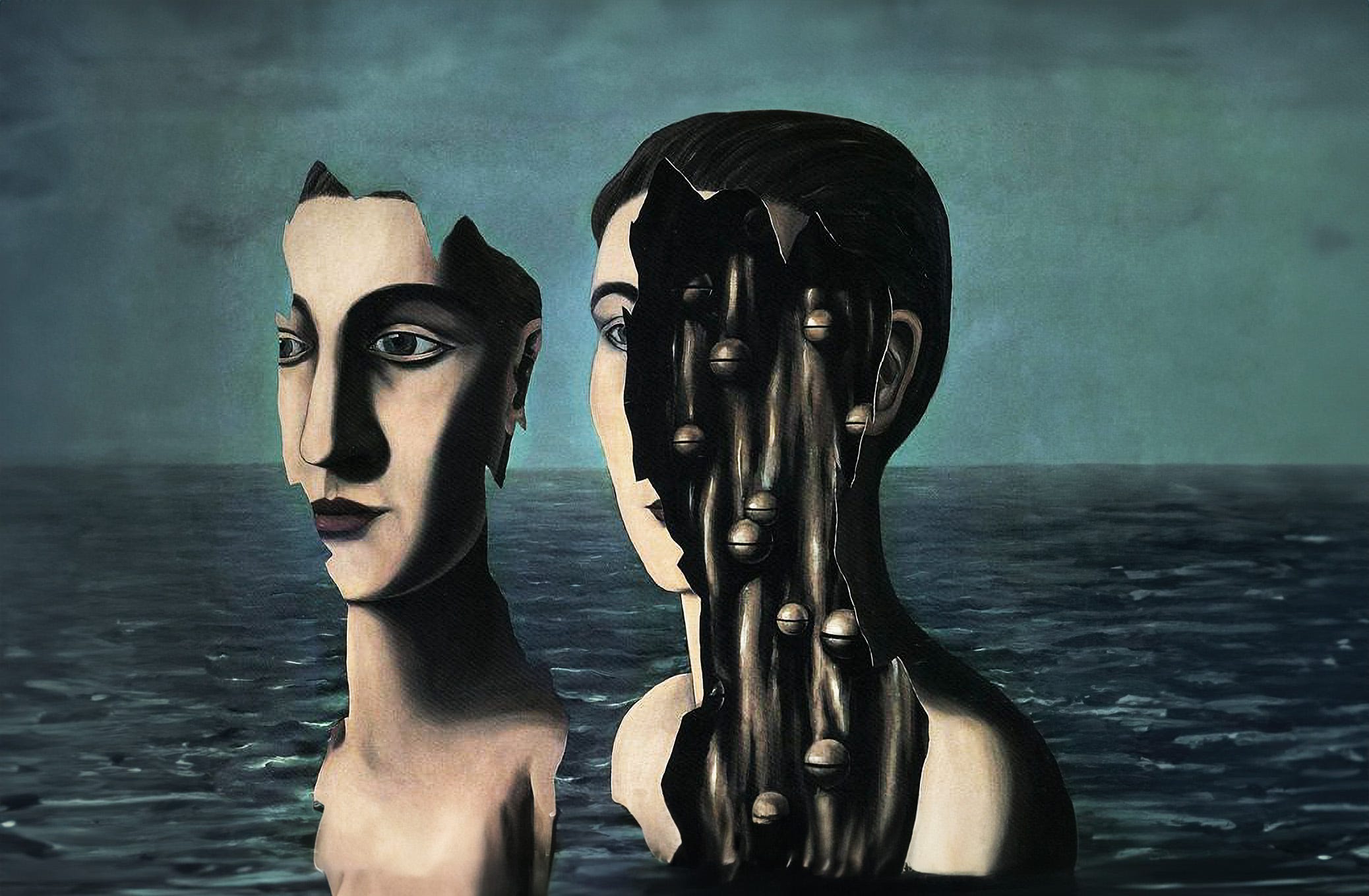
Some weeks ago now, a friend of mine was giving a talk on the meaning of life in the basement of the Hook & Ladder café on the corner of Henry Street and Sarsfield Street. I’ve been thinking about that evening ever since. It wasn’t the talk itself that burrowed under my skin (excellent though it was) but the group discussion that followed.
One of the men at my table, a farmer named Pat, was the first to offer his tuppence:
“I was married for 51 years to a wonderful woman and we had a great life. She died three years ago. Now there is no meaning in my life. It’s fine when I go out during the day but when I get home at night the emptiness hits me like a ton of bricks.”
His voice wavered; his eyes misted. It was wrenching. We all felt it; the air swollen thick with the reflexive empathy of grief. It was one of those pure raw expressions of humanity that inspires deep and immediate love as if for your best buddy shot beside you in the trenches of a horrendous war.
There were no pretensions to philosophy or theology here; Pat wasn’t trying to garner pity or evoke any emotions. It was merely his honest wrestling with the question of the night. The sentiment’s power didn’t come from a studied rhetorical eloquence but from the emotion bleeding through the cracks in his restraint.
It was always going to be a tough act to follow.
Cue speaker #2: a somewhat lanky young man with a shaved head; let’s call him Siddhartha. His response was a little more…cerebral.
“The meaning of life for me is wrestling with my dark side—facing the parts of me I don’t want to look at.”
I don’t want to be too harsh. Which means of course that I really do want to be but I’m going to add some qualifiers before so I can sleep tonight.
You don’t need to be a depth psychologist to notice my reaction to Siddhartha’s response has a whole lot more to do with my own Shadow (the irony doesn’t escape me) than it does with the lanky young man in the basement of this café. His response was like looking in a mirror at my younger self.
It seems to me that the Shadow reaction (or maybe it’s just this species of it) comes from outgrowing something. Or maybe not fully outgrowing it (Brene Brown’s words that you can only love others as much as you love yourself seems relevant). I didn’t like that way of being and so I grew away from it. I chose to be different to that because I didn’t like it. It’s not like my Pokémon-loving younger self; I grew away from that but there was no self-denial in that change. We dislike that which we choose to not be. Then, when we encounter this version of us in the wild, it’s hard to be compassionate.
I’ll return to this theme later but first let’s explore my disgust with Siddhartha because there is something in that worth dwelling on.
Lessons from Siddhartha
Plato once wrote that you shouldn’t study philosophy until you’re 50. When I was young, I scoffed at this: what hypocrisy from a man who followed Socrates around as a 20-something and started writing philosophical dialogues in his 30s. Now I would make it a rule of law.
It’s like drugs. As a teenager, I thought you should make it all legal and let people make their own decisions. But I had a lot of friends who were saved from addiction to legal highs thanks to illegality. A little friction can go a long way.
When I think about the difference between Pat and Siddhartha, I think about a life wasted on theory. Siddhartha’s life is mediated by ideology; everything is filtered through the lens of his current favourite theory (in this case: Jungian).
Returning once again to the idea that the metric you choose determines the life you’ll live, these ideologies give goals and warp the lives of their adherents around those goals. Whether that goal is enlightenment, individuation or activism, the result is the same: it cuts them off from life.
Maybe this is what Kierkegaard, Nietzsche, Heidegger and Jung were warning about with modern life: the flattening of the human experience so we become cookie-cutter humans in the Crowd/Herd/Das Man.
It breaks my heart to see it now.
My reaction is undoubtedly linked to my jadedness with the culture wars and political discourse and with all forms of ideology. I see zombies walking around, their minds filled with talking points, arguments, counter-arguments, strawmen and ideological fervour. They have imaginary arguments in their head about immigration, tariffs and the end of the world (whatever form that takes in their ideology).
The world is filled with these ideological zombies. They are fighting on an archetypal battlefield saving the world from the Woke or the Patriarchy or the Deep State or multi-dimensional shape-shifting lizards. They are heroes in a mythological story and it seems eminently important that they take up arms against this sea of trouble.
And then I think of Pat. 51 years of marriage to a wonderful woman. A life, kids and all the while running the farm. Of course, I’m romanticising him; it’s a pastoral idyll. But I know that when I consider the two lives: the one of ideology, and the other of simply living, I know which one I admire1.
I don’t hate philosophy now. Only, I think it should be closer to play than war. It should be closer to wonder and exploration than tribalism and moral purity. Love, beauty and awe rather than callous, serious, “important” intelligence. That levity is what I love in philosophy these days.
Of course, most will disagree. I am becoming a tragic old grump when it comes to ideology.
You might rejoinder that the problems facing us are heavy: the Fascist renaissance, the Woke brainwashing, the meaning crisis and climate crisis. Fair enough. I wonder how much these problems (in the case of the former three at least) were caused by “serious” discourse in the first place—an ouroboros circlejerk death spiralling into a brave new world.
Perhaps this present transformation I’m undergoing is just my way of shedding the heaviness that all this theoretical discourse has gotten itself mired in. It’s my way of getting back to play and wonder and awe. My Shawshank Redemption to beauty.
Man in the Mirror
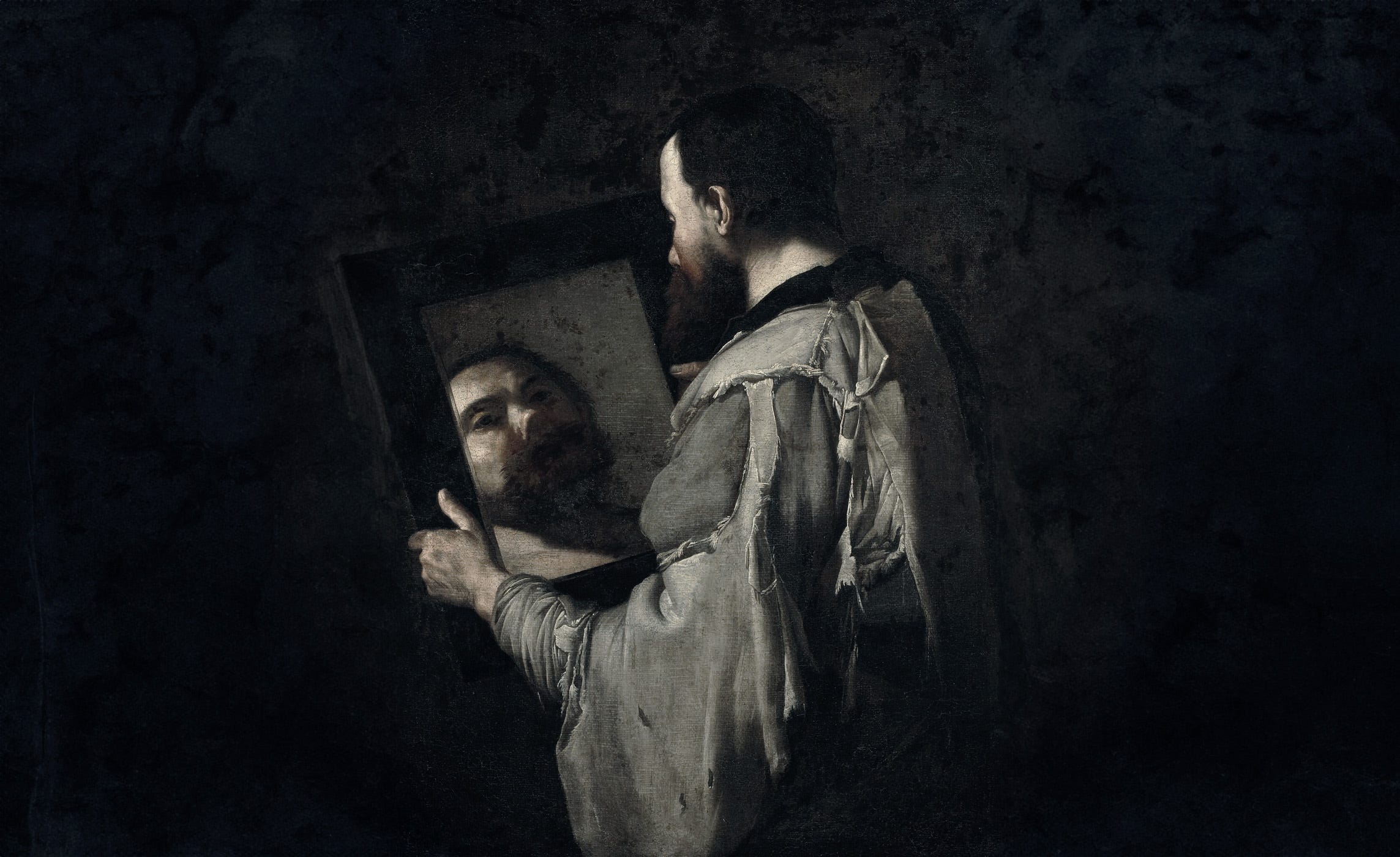
Now, to dig a layer deeper, let’s psychoanalyse my reaction to Pat and Siddhartha. In my heart of hearts, I appreciate that each of us has our own role in the ecology of the human hive. There are artists and philosophers, builders and farmers, engineers and architects, lovers and carers, warriors and leaders. Temperamentally, we each have our own gift to offer society and these fall into only so many archetypal configurations. Call them the 16 types of Myers-Briggs, the 9 types of the Enneagram, the four humours, the 12 archetypes or however else you want to cut the pie up. The point is, there are clusters of human types.
Whatever Siddhartha is, I’m right there with him. We are cut from the same cloth as the Nietzsches and Rousseaus of the world. The ones addicted to the Platonic realm of ideas rather than the world of matter—our existence cut off at the neck.
So what is my reaction to Pat then? Is my admiration envy? My ideal is no longer the life of the mind. Theoretically, I appreciated this since reading Nietzsche as a teenager. Now in my mid-30s, the texture of this feeling has changed. It is weathered with the hard edges of experience. Maybe it’s being in the trenches, in the desert, the dip between two affirmations of my type. But for now, I look at young Siddhartha and his ideology-mediated experience of the world, and I feel pity and disgust. I see a perfect trap that he can’t escape because all attempts at escape will only make the prison more complete. It is a sort of blind Stockholm Syndrome—what seems like rebellion is only another affirmation.
I see Siddhartha and recognise the trap he is in because I have spent most of my life in it and only recently feel like I have gotten some freedom from it. And so I look at Pat and I see someone who is not trapped in the ivory prison and who instead went about the messy business of living. I admire his life because it contained certainty—farming, love, family.
Of course, I’m projecting as much on Pat as I am on Siddhartha, but isn’t that telling? Were I younger, I would have craved being the smartest, most insightful person in the room. I would have felt a competitive impulse towards Siddhartha (albeit repressed, justified), but now I feel only disgust (and perhaps beneath that a smug superiority?).
Now, my impulses turn towards Pat and the world of the living.
This too is a common turn in the philosophical type that Siddhartha and myself exemplify. This was Nietzsche’s whole turn towards the Dionysian and away from the ascetic priestly type. I can’t help but read this type of overcompensation everywhere I look in Sartre. There’s the Romantic urge in Rousseau and the love of the real people and of nature. What a sordid type we are.
I could look at this through the Jungian typological lens. The introverted intuitive (Ni) dominant types (INFJ, INTJ) have extraverted sensing (Se) as their inferior function. Jung would say that the individuating turn is about cultivating our inferior function. We spend the first half of our lives thriving in our dominant function, then we work to integrate our lesser functions. I feel disgust for the Ni dominance of Siddharth,a and I admire the life of Se dominance I project onto Pat. Seen through an ideological lens then there’s hope.
But I’m so suspicious of looking that direction. Perhaps it’s a Goodhart’s Law problem. Such an indicator might be useful in the hands of the psychologist but for the patient themselves it may be harmful. It all seems like overcompensation which raises the question: what to do? Nietzsche rebelled intellectually but like Siddhartha the form of his rebellion only reinforces his prison. I have done and am doing much the same.
There is too much scheming in my type. We are trying to play chess against ourselves. Our soul is a hall of mirrors. We hate ourselves and envy others. But we are addicted to that which we hate. Despite all evidence to the contrary, we still try to use the weapons we hate to find what we love.
I’ve begun calling this attempt to escape ideology via ideology the Nietzsche Trap. Nietzsche criticises the ascetic priestly type in Genealogy of Morals as withdrawing from life. But isn’t this just self-loathing in the end? This is the new layer that I am conscious of. My disgust with the desire to be smart and insightful is a self-loathing. It doesn’t work. Rebelling against Capitalism sells a lot of Doc Martens and Che Guevara t-shirts; rebelling against ideology with ideology only reinforces the prison.
But I think again of the ecology of the species. If we each have a role in the hive then why not play my role? Instead of fighting my nature, why not fully embrace it and hone the gift? I can love Pat and accept I will never live a life like that. Joseph Campbell said that the first stage of the hero’s journey is “refusal of the call”. Us children of Nietzsche keep on refusing that call, but perhaps it’s high time we embrace the destiny the Fates have spun for us rather than cursing the gods for our gifts. We should imagine Prometheus happy2.
Another possibility: this has more to do with the mindset of a man in his mid-30s.
Or that’s another attempt at ideologising my way out of my predicament and instead perhaps I should just follow the lay lines of my unfolding. That might also work. But it’s not as catchy a closer as imagining Prometheus happy
Thoughtful, thought provoking article, thanks. Have you considered illustration, making a drawing, to project your thoughts more constructively, less guiltily than philosophizing or psycho analyzing? Works for me. You are already half way there with the magrette and the uncredited baroque-ish painting. Us imaging albert's boulder boy happy only helps us with our own futilites, it does nothing for him, so depending on how much empathy you have you joy is canceled by his woe
Excellent writing, so enjoyable. A couple of thoughts from the bleachers… always presumptuous !
77, my life spent with the dying providing hospice care.
Siddhartha:
Seeking comfort in the mind, the only place certainty can exist in the presence of emerging vulnerability.
You:
Absent certainty. Discovering life is only lived in the presence of vulnerability (Pat)
Robert Bly:
“As children, we knew ours was a muddy greatness.”