

“The field of user experience has a concept called “Information Architecture”. Information Architecture focuses on how and what information is presented to users to provide the best possible user experience. You rarely notice a good IA, but you notice the lack of one.”
— ryan, Rethinking CLI Interfaces for AI
Without my planning it, The Philosopher’s Toolkit is turning into a meta-study of belief systems (or as I like to call it, “Metacartography”).
I’m fascinated by systems. I always have been1; the more all-encompassing, the better, whether that’s Jung’s individuation system (which is intertwined with his iceberg-esque model of the psyche), Hegel/Marx/Integral’s historical dialectical system, or Jordan Peterson’s Order and Chaos.
I love a good map.
But these maps have failed me. I shouldn’t be surprised. As the old statistician’s aphorism goes, “All models are wrong, but some are useful”. Or, the more Metacartographic way of putting it: “the map is not the territory”.

The problem, so far as I can tell, is that I went off the reserve. Every map has its shadowy places — its hic sunt dracones. My curiosity took me to the elephant graveyard of my maps, and it was there that they fell apart.
Funnily enough, the elephant graveyard was the same for all of them: Postmodernism4. In the belly of that whale, what wonders I discovered. Everything I’d been told about that shadow-y place was warped and distorted. And once the shadowy stories proved false, the maps which relied on this bogeyman no longer worked.
And then: aporia.
Since then, I’ve continued to meander through the mapless desert, and I’ve begun to play with Metacartography. Out of necessity.
In The Structure of Scientific Revolutions, Kuhn talks about how paradigmatic crisis forces scientists to “recourse to philosophy” (Kuhn 1970: 91):
“It is, I think, particularly in periods of acknowledged crisis that scientists have turned to philosophical analysis as a device for unlocking the riddles of their field. Scientists have not generally needed or wanted to be philosophers. Indeed, normal science usually holds creative philosophy at arm’s length, and probably for good reasons. To the extent that normal research work can be conducted by using the paradigm as a model, rules and assumptions need not be made explicit.” (Kuhn 1970: 88)
When I came across the concept of Information Architecture, a Rube Goldbergian series of lights and bells went off in my brain.
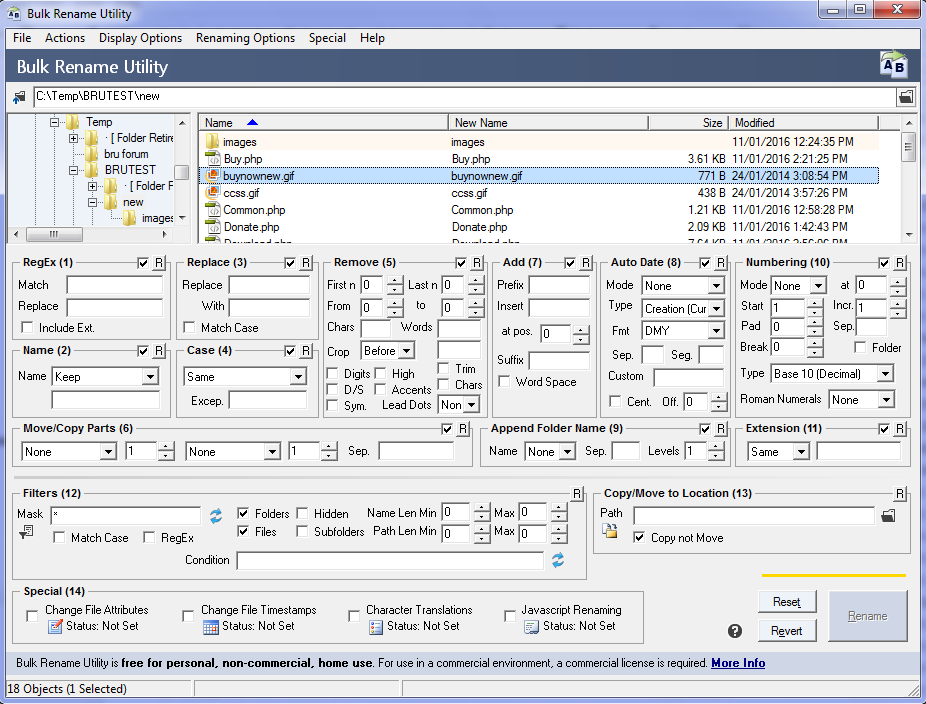
This is bad Information Architecture, and it is gloriously awful. It is beautiful in its awfulness. I love it. This is a map with no elephant graveyard. This is a map that leaves no stone unturned. Consequently, it is useless. It is the cognitive load equivalent of Sisyphus’s boulder. I can’t but respect it for the light it casts on good Information Architecture.
False Dichtomising
There’s a philosophical fallacy called a False Dichotomy in which you are presented with two mutually exclusive choices. Anti-racism was a classic False Dichotomy. The presentation of that doctrine was that if you weren’t anti-racist, you were racist; there’s no in-between. When you stop to think about it for more than five seconds, this, of course, is horseshit2, but as a rhetorical technique, it’s spectacularly effective.
It’s also a very elegant example of Information Architecture. No theoretical nuances here. No debate club point and riposte. Just a map which limits the choices you are offered to something monstrous or something divine. You get to choose.
This is the most interesting thing about Information Architecture: the illusion of agency it creates. You are making a choice. But what you don’t know is that the choice you are making is not taking place on level ground. The creator of the map tilts the floor so you are likely to fall in their direction. The more delicate the touch, the better. As Pseudo-Samuel Coleridge3 said:
“Advice is like snow – the softer it falls, the longer it dwells upon, and the deeper it sinks into the mind.”
Be wary of the mapmakers, for they shape the world in which we live. The hidden incentive structure baked into your day-to-day life, statistically nudging you like cattle to pasture. Is there any power greater than the sculpting of reality? Ah, to be the Information Architect who creates the map.
Of course, we must be careful even here because this formulation puts the power in the mapmaker’s hands. But the territory cannot be idly mapped. You can draw a map as nice as humanly possible, but if it doesn’t accord with the memetic structure of the system — with its peaks and pools — then you’re shit out of luck.
Bibliography:
Kuhn, T. S. (1970) The Structure of Scientific Revolutions. 2nd edn. Chicago: The University of Chicago Press. (International Encyclopedia of Unified Science, Vol. 2, No. 2)
ryan. (2025) Rethinking CLI Interfaces for AI
(if you are too, you’ll probably want to join our book club reading of Thinking in Systems)
Though I am sympathetic to Ibrahim X Kendi’s broader definition of an act as racist or antiracist — that is, as moving things towards a more equitable world or further from it. But this wasn’t the claim of the BLM era of the New Left. Also, while more defensible, it’s not what you’d call airtight.