

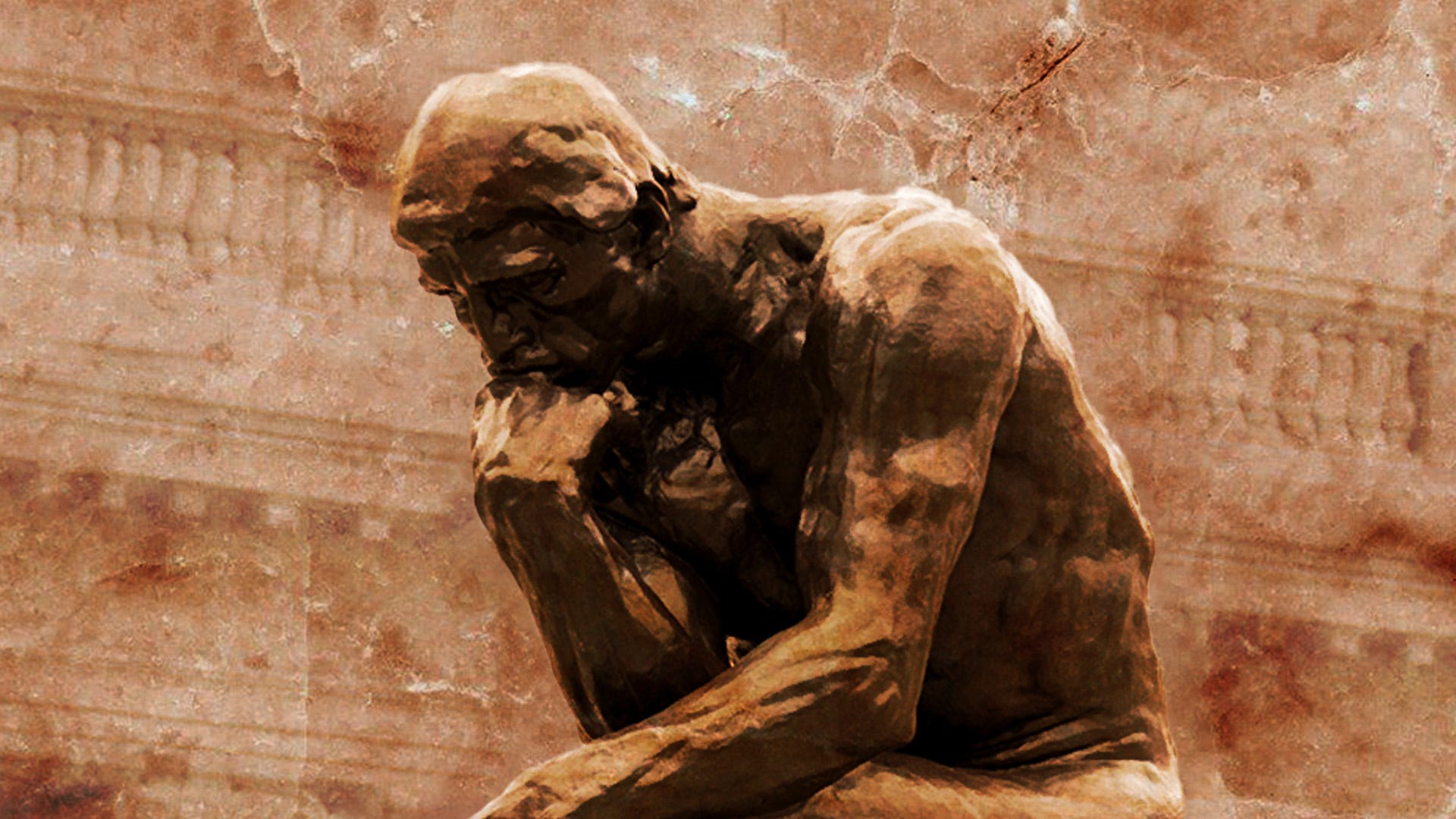
Georg Northoff is the smartest person I’ve ever spoken to. With just shy of 50,000 references on Google Scholar and a h-index of 115 he’s among the top scientific minds in the world (in the 0.01% by Claude’s calculations). In our brief pre-pod chat, we discussed how the Predictive Processing school of neuroscience is stuck at the Kantian and how Heidegger was still pre-Copernican. I say “we discussed”; I was just trying my best to keep up.
Having delved some of the rabbit holes in our full podcast together, I find myself reflecting on some threads that have been cooking since the first podcast chat with Gary Clark last year.
The worry I expressed then, and I’ve expressed it many times since, is that depth psychology has ended up on a sandbar disconnected from the rest of science. The main thrust of science has moved on and I worry about depth psychology becoming another alchemy, historically notable for giving rise to a new science but otherwise redundant.
The past year has shown me that this is not the case. It started with Clark connecting archetypes to deep structures in the brain. Erik Goodwyn expanded on this with connections to the Default Mode Network and beyond in our two episodes together (one, two). Then more recently came the chat with Aldrich Chan on Taoism and neuroscience. During our pre-pod chat, I learned he had read Jung’s Collected Works and how much of an influence Jung is on his thinking. It was Chan that connected me with Northoff after which all these dots are beginning to connect.
It seems then that there is something happening in the field of neuroscience that is leading to a resurgence of depth psychological thought. Given my struggles with the weaker pillars of Jung’s thinking over the past few years, this is great news.
I find myself at an odd intersection. I’ve received emails accusing me of bad faith in talking about Jung’s racism and the accusations of antisemitism; the accusation is that the only reason I wrote those pieces was filthy lucre. Meanwhile I’m halfway through a Master’s in Art, Psyche and Creative Imagination that is a wonderful immersion in Jung’s work from the side of art and praxis. Through that I’ve been reconnecting with the beating heart of the depths; all the theoretical tearing apart online had left everything a bit dry and this was my way of diving back in the waters.
I find myself then at an odd confluence of all parts of the Jungian legacy — the more hippie praxis side that I love, the scholarly debate among the depth psychologists (a storm in a teacup to the rest of the psychological field) and this emerging neuroscientific leading edge that is reconnecting depth psychology to the rushing flow of contemporary science.
Northoff stands right at the heart of this revolution. It was this triple qualified neuroscientist-psychiatrist-philosopher who brought the self into the conversation about the Default Mode Network. He connected that default noise in the brain with the hum of the self. From there a lot has begun clicking into place. Of course, Northoff’s mentor and founder of affective neuroscience Jaak Panksepp himself wrote about Jung towards the end of his life. The basic discovery here, that Northoff delves in our podcast together, is that the self is not a higher order function. Consciousness is, but the self is deeper. After so many years, science returns to the underworld.
Another Avenue for Investigation
There is another thinker prominent in the chat with Northoff who has been another emergent theme in the podcast: Alfred North Whitehead. I know Whitehead as the mathematician who wrote the Principia Mathematica with Bertrand Russell in the early years of the 20th century - a work which shaped the course of the Anglo-American philosophical tradition (so-called Analytical Philosophy) for decades to come. I’ve also quoted Whitehead’s famous line a thousand times over the years, that:
“the safest general characterization of the European philosophical tradition is that it consists of a series of footnotes to Plato”.
That quote comes from a book called Process and Reality written a couple of decades or so after his collaboration with Russell. In that book as I understand it, Whitehead transforms Western ontology. Instead of a world of discrete things, Whitehead looks at the fundamental units of reality as processes. We are back to Heraclitus’s inability to step in the same river twice. Change regaining primacy over being (Nietzsche would be so pleased). I also can’t help but think of the wave-particle duality in theoretical physics. Whitehead restored the wave perception of reality to our view of the world. This process perpsective has explicitly entered the field of theoretical physics with the work of Carlo Rovelli and his Whiteheadesque interpretation of quantum phenomena.
Northoff is not the first guest to talk about Whitehead on the pod. Brendan Graham Dempsey, Adriana Forte, Aldrich Chan and Jon Mills are the ones that come to mind. And that’s an interesting bunch since it seems that Whitehead emerges at the overlap of the two major groups of the podcast: the integral/metamodernists on one side and the Jungian/neuroscientists on the other. Taking a hint I’ve got myself a copy of Whitehead’s Process and Reality and when I pluck up the courage I’m going to immerse myself in it.
On the subject of courage, it was also nice to hear Northoff’s hat-tip to Deleuze. Deleuze and Guattari’s A Thousand Plateaus is another one of those books that calls to me and that I’ve read around. It’s of a similar ilk and I imagine one we’ll talk about more here in future. I must reach out to some Deleuzians and invite them on.
Anyway I just wanted to share these reflections on what I’ve seen emerging on the podcast and what it’s been stirring in me. I feel a new philosophical sensibility emerging and it’s exciting!
"The self is not a higher order function, consciousness is, but the self is deeper." If that's right, the self isn't something built up out of complexity or narrative, it's more like the ground those things arise within, which is a completely different picture than the usual "self as the brain's most sophisticated trick." Pair that with Whitehead's processes-not-things move and you get something that looks like an old vitalist intuition wearing new instruments, not a fixed thing occupying a body, but one continuous flow finding itself briefly organized as this particular self, this particular now.
The idea that reality is fundamentally process rather than static things seems to be appearing in more and more fields. Philosophy, neuroscience, and physics may be converging on the same intuition.