

In the first week of our Thinking in Systems book club, I mentioned an insight that struck me deeply. In this post, I want to unpack my big epiphany.
As you know, I’ve been doing a lot of writing/thinking about epistemic foundations recently: clusters, constellations and paradigms. Thinking in Systems gave me a major insight that changes the structure of the metaphor.
💡New insight unlocked: clusters of beliefs can travel together with other clusters.
In these pages, I recognised a dead constellation and felt homesick, because this constellation was my homeland — my Paradise Lost.
What I realised is that clusters are, keeping with the astronomical/astrological framing, less like constellations and more like planets. The constellation metaphor is too static to capture the dynamism of belief systems.1
The planet metaphor works better for our current purpose. Astrologically, the relationship between the planets is constantly shifting. They can be in alignment for a time before parting ways and lining up with others.
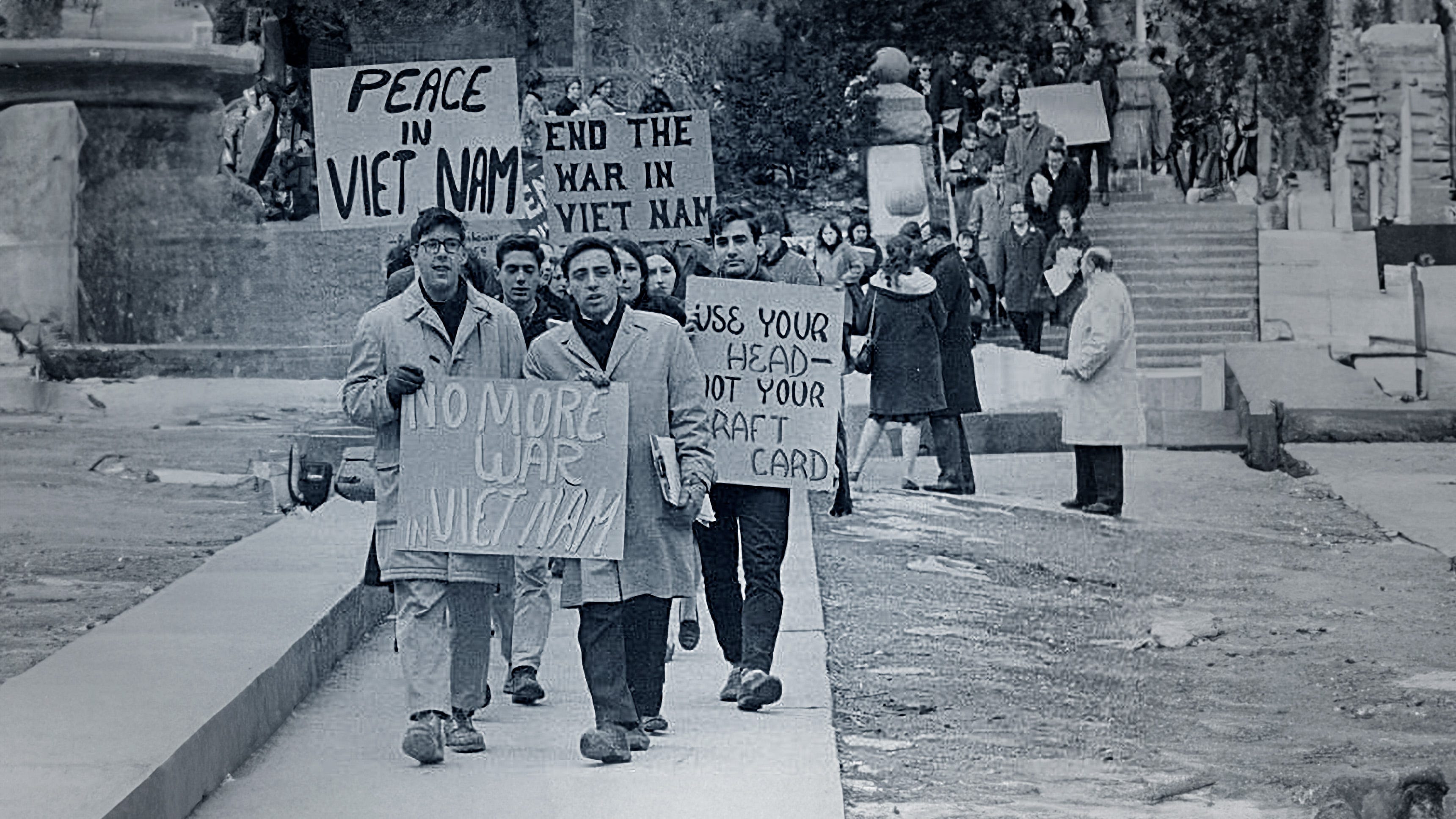
In the case of Thinking in Systems what I’m talking about is the constellation between the hippie and lefty constellations. For half a century, these clusters travelled together. The 60s counterculture was a fusion of hippiedom and leftism.
With the Great Awokening circa 2011, the Leftist constellation began to pull away. With peak Woke in 2016, this divide hastened, and with Covid, the veil was torn.
The hippies — always radicals at the margins — tilted over to right-wing radicalism just as they had done in the first half of the 20th century.
One surprise in this decoupling is that the climate crisis went with the leftists in the celestial divorce. You would think that this issue had hippie written all over it; it is, after all, about ecology, it’s about Man fitting in with Nature and nature. That seems very much hippie stuff.
But the climate crisis is such an ace in the deck of anti-capitalist discourse that it’s the leftists who have really fought for custody of the climate crisis, and so it has drifted into their orbit with the divorce. The dynamics of clusters being what they are, once it gets associated with a discourse, it stays in its orbit (see Immigration and Populist Right).
The decoupling of left hippieism
I’ve seen this decoupling of left hippieism up close. I have three friends — who would have been varying degrees of hippie-left before 2016 — that got devoured by the memetic gravity of Wokism and shed their hippier edges (or at least strongly de-emphasised them).
Meanwhile, I can think of two other friends who kept to the hippie thing and have become much more right-wing in their views (one following Russell Brand in his oscillation from radical leftist to radical rightist). These stayed in hippie orbit and have found themselves with new bedfellows. These latter two, it is worth noting, were always more hippie than lefty pre-2016 so perhaps that explains it. It might also be explained by their being non-big-city dwellers in comparison with the three who went full Woke.
So the lefties took climate change and social justice, they rejected the internal world in favour of systemic thinking (coming out of the Critical Theory school rather than this hippie leftist school of Meadows — we could hypothesise more here about the role of systems thinking in all this). Attendance on the inner world and self-actualisation becomes “desperate narcissism”. The internal system is stripped away so only the systemic point of view remains, hence the “crushing misery” of being a leftist today.
Meanwhile, the hippies took Jung and Nietzsche and headed rightwards. I suspect that this is why Jordan Peterson’s moment had arrived. Peterson was always a more right-wing Jungian — which had been an outlier for the past 50 years. With the decoupling of the hippies and the lefties, Peterson’s moment had come.
This makes sense of a lot of my personal experience. I was always more of a hippie lefty than a hipster lefty (pure New Left leftism) or hippie righty. In university, I was an avid Thoreauvian anarchist — converted by the first lines of On Civil Disobedience2. I studied up on Kropotkin and Bakunin and general Anarchist theory, but never got much further than Thoreau’s version.
Thoreau, incidentally, is a perfect example of the decoupling of hippie leftism. He’s now dismissed as suppressing the hidden labour of women because he didn’t mention that his mother and sister did his laundry. Meanwhile, his work on the Underground Railroad is ignored to make this new Thoreau fit the mould. Here’s a typical example of the modern left attitude towards Thoreau from one of my beloved sappy romcoms Love Hard (2021):
Nietzsche, as I talked about in the early days of YouTube was a pioneering feminist before undergoing one of these great decouplings. His work has oscillated from the hippie right of Nazism to the hipster left with the Postmodernists (though Foucault with his turn to the care of the soul in his final phase, was more hippie-ish than the others — all that time in California no doubt making its way into his soul).
Jung’s work underwent a similar trajectory. Ideologically, his work is, as we’ve previously looked at, a fellow traveller of Fascism (hippie rightism), but with the drifting of hippieism into the leftist orbit in the 1960s, Jung was a canonical thinker for the countercultural movement (and you can see his language being borrowed by Meadows in Thinking in Systems in the 1990s).
It’s still a bit of a mess for me to figure out what the dynamics of this are at the moment. I was a hippie leftist. But then, I was a big Peterson fan and an acolyte of the Intellectual Dark Web. But a collision with the increasing Shadow of this new constellation drove me away from this emerging hippie rightism into the arms of hipster leftism. But while the Nietzschean systems thinkers like Foucault, Deleuze and Baudrillard are right up my alley, I don’t feel at home in the hipster left any more than I do on the hippie right.
So I’ve come to realise that my sense of ideological homelessness stems in some part from the death of my home constellation of hippie leftism. That’s where my identity had formed and matured. It is this that I’ve been grieving the loss of. My hippie leftist tribe fragmented into hippie right (much of which I find morally repulsive) and hipster left (much of which I find morally repulsive).
I’m aware that this was a messy post. These are newly born thoughts, and I’m trying to use various frames to make sense of them that may not be ideal. I feel like this conjunction between belief systems is going to break the constellation metaphor a bit so we’ll have to see if the planet one holds up.
Meanwhile I’m left with further questions:
Why were Peterson and the IDW so seductive?
Were they on the same drift rightward, or were they waiting with open arms?
What about Ken Wilber’s Integral and Metamodernism? You can see the disgust with the hipster left with Wilber in the early 90’s book Sex, Ecology, Spirituality and onwards.
So was there always an antagonism?
Am I making a monolith out of the left or out of hippieism? Perhaps the constellations are stable, but the memetic herd pull us between them?
How are the philosophy hipster side of me and the depth psychological hippie in me related? And where does my long under-emphasised hacker nerd self come in (I’ll be writing about Hanzi Freinacht’s Hacker/Hippie/Hipster idea soon)
Random one: can political ideology be a safe home without a complementary living ideology like hippieism?
And: does leftist hippieism contain all the elements of a balanced life?
One thing I can say is wonderfully at home I feel with Thinking in Systems. The whacky, uncritical airiness of hippieism is tempered by the more rigorous leftism. The moral stick up the arse of leftism is tempered by the chill earthy vibes of hippieism. The vibes harmonise beautifully. We’ve got a systemic complexity approach to problems, which is something I love in Marx, the Postmodernists, Wilber and the Metamodernists. Couple that with unashamed psychological compassion for individuals, Jungian language and Sufi stories, and you’ve got me humming with hygge.
P.S. I wrote most of this article after the first week of the book club. Since then I’ve been talking with more Jungians (including evolutionary theorist X Jungian Gary Clark) and have been seeing a different side of the community reflected back at me. As I start out on a part-time Masters in Jung I am curious to see whether the offline community of Jungians are of a different breed than the online. Nothing is ever so simple and Jung’s legacy is ever-complex!
Though it does work better for capturing the networked nature of beliefs, but then maybe if we think of the beliefs as moons or we think of the hegemon as the sun then it still works? 🤔🤔🤔
I heartily accept the motto, “That government is best which governs least”; and I should like to see it acted up to more rapidly and systematically. Carried out, it finally amounts to this, which also I believe- “That government is best which governs not at all”
I might help to refine the hippie and hipster as culture tropes or perhaps archetypes. If archetypes are these figures recurrent through history? (Ie. The adamites —> lebensreform —> hippies?) Are there subcultures where hippie and hipster overlap (ie. Beatniks, the original hipsters). Is the hipster a modernist invention? Could we sketch a temperamental core of each archetype (Big 5, etc)? The most obvious difference seems to be that while both are wanting freedom from oppressive systems the hippies are more embodied and the hipsters are more cerebral (academic) in their approach.
I think you should expand more on this idea. In current times many who consider themselves on the left never signed on to the violence being done in their name now nor most of the woke dogma. I think however it is something we have seen before.
Didn't the Beatles come out with Revolution in 1968? "But when you talk about destruction
Don't you know that you can count me out" Wasn't that them talking about the New Left.
Maybe it is an alignment thing like with celestial bodies. Temporary before they keep going on their own path.